
Cool-Season C3 Photosynthesis
Active foliar expansion in spring and autumn with cold winter persistence. Thrives under temperate northern solar incidence with high freezing tolerance.
Turfgrass species are categorized into cool-season grasses (Kentucky bluegrass, tall fescue, perennial ryegrass) thriving in 60°F–75°F temperatures, and warm-season grasses (Bermudagrass, St. Augustine, Zoysia) excelling above 80°F. Access the interactive comparison matrix below to match species to your sunlight, mowing height, and climate zone.
| Turfgrass Species | Season Class | Blade Anatomy | Growth Habit | Mowing Height | Shade Tolerance | USDA Hardiness | Agronomic Citation |
|---|---|---|---|---|---|---|---|
| Kentucky Bluegrass Poa pratensis | Cool-Season | Boat-shaped tip Folded vernation | Rhizomatous (Sod-forming) | 2.5 – 3.5 in | Low (Full Sun Required) | Zones 3 – 7 | Purdue University Extension Turfgrass Science (AY-11-W) |
| Tall Fescue Festuca arundinacea | Cool-Season | Pointed tip Rolled vernation | Bunch-type (Tillering) | 3.0 – 4.0 in | Moderate | Zones 4 – 8 | University of Missouri Extension (G6705 Turfgrass Species) |
| Perennial Ryegrass Lolium perenne | Cool-Season | Pointed tip Folded vernation | Bunch-type (Tillering) | 1.5 – 2.5 in | Moderate | Zones 3 – 8 | Penn State Extension Turfgrass Seed ID |
| Fine Fescue (Creeping Red) Festuca rubra | Cool-Season | Needle-like tip Folded vernation | Rhizomatous (Sod-forming) | 2.5 – 3.5 in | High | Zones 3 – 7 | Cornell University Turfgrass Program Cultivar Guide |
| Bermudagrass Cynodon dactylon | Warm-Season | Pointed tip Folded vernation | Both Rhizomes & Stolons | 1.0 – 2.0 in | Low (Full Sun Required) | Zones 7 – 11 | Texas A&M AgriLife Extension (AggieTurf Bermudagrass) |
| St. Augustine Grass Stenotaphrum secundatum | Warm-Season | Boat-shaped tip Folded vernation | Stoloniferous (Creeping) | 3.0 – 4.0 in | High | Zones 8 – 11 | University of Florida IFAS Extension (St. Augustinegrass for Florida Lawns, ENH5) |
| Zoysia Grass Zoysia japonica / matrella | Warm-Season | Pointed tip Rolled vernation | Both Rhizomes & Stolons | 1.5 – 2.5 in | Moderate | Zones 5 – 10 | Clemson University Cooperative Extension (Zoysiagrass HGIC 1218) |
| Centipedegrass Eremochloa ophiuroides | Warm-Season | Boat-shaped tip Folded vernation | Stoloniferous (Creeping) | 1.5 – 2.0 in | Moderate | Zones 7 – 9 | NC State Extension (Centipedegrass Maintenance Calendar) |
| Bahiagrass Paspalum notatum | Warm-Season | Pointed tip Folded vernation | Both Rhizomes & Stolons | 3.0 – 4.0 in | Low (Full Sun Required) | Zones 8 – 10 | University of Florida IFAS Extension (Bahiagrass for Florida Lawns, ENH6) |
| Buffalograss Bouteloua dactyloides | Warm-Season | Pointed tip Rolled vernation | Stoloniferous (Creeping) | 2.0 – 3.5 in | Low (Full Sun Required) | Zones 3 – 9 | University of Nebraska-Lincoln Turfgrass (Buffalograss Management) |
| Rough Bluegrass (Poa trivialis) Poa trivialis | Cool-Season | Boat-shaped tip Folded vernation | Stoloniferous (Creeping) | 2.0 – 3.0 in | High | Zones 3 – 7 | Penn State Extension Turfgrass Weed Factsheets |
| Annual Bluegrass (Poa annua) Poa annua | Cool-Season | Boat-shaped tip Folded vernation | Bunch-type (Tillering) | 0.2 – 2.0 in | Moderate | Zones 3 – 10 | University of California IPM Poa annua Management |
| Carpetgrass Axonopus affinis | Warm-Season | Boat-shaped tip Folded vernation | Stoloniferous (Creeping) | 1.5 – 2.5 in | Moderate | Zones 8 – 9 | Mississippi State University Extension Carpetgrass |
| Seashore Paspalum Paspalum vaginatum | Warm-Season | Pointed tip Folded vernation | Both Rhizomes & Stolons | 0.5 – 1.5 in | Moderate | Zones 8 – 11 | University of Georgia Seashore Paspalum Research |
| Creeping Bentgrass Agrostis stolonifera | Cool-Season | Pointed tip Rolled vernation | Stoloniferous (Creeping) | 0.1 – 0.5 in | Low (Full Sun Required) | Zones 3 – 6 | Michigan State University Turfgrass Bentgrass Ecology |
| Hard Fescue Festuca trachyphylla | Cool-Season | Needle-like tip Folded vernation | Bunch-type (Tillering) | 2.5 – 3.5 in | High | Zones 3 – 7 | University of Minnesota Extension Fine Fescue Profiles |
| Chewings Fescue Festuca rubra subsp. commutata | Cool-Season | Needle-like tip Folded vernation | Bunch-type (Tillering) | 2.0 – 3.0 in | High | Zones 3 – 7 | Rutgers Center for Turfgrass Science Chewings Fescue |
| Sheep Fescue Festuca ovina | Cool-Season | Needle-like tip Folded vernation | Bunch-type (Tillering) | 2.5 – 4.0 in | Moderate | Zones 3 – 6 | USDA Plants Database Festuca ovina Species Profile |
| Kikuyugrass Pennisetum clandestinum | Warm-Season | Pointed tip Folded vernation | Both Rhizomes & Stolons | 1.0 – 2.0 in | Low (Full Sun Required) | Zones 9 – 11 | University of California IPM Kikuyugrass Management |
| Dichondra (Lawn Substitute) Dichondra micrantha | Warm-Season | Boat-shaped tip Rolled vernation | Stoloniferous (Creeping) | 0.75 – 2.0 in | Moderate | Zones 8 – 11 | UC Riverside Turfgrass Groundcovers Dichondra |
| Redtop Agrostis gigantea | Cool-Season | Pointed tip Rolled vernation | Rhizomatous (Sod-forming) | 2.0 – 3.5 in | Moderate | Zones 3 – 8 | Purdue University Extension Forage Species Redtop |
| Meadow Fescue Festuca pratensis | Cool-Season | Pointed tip Rolled vernation | Bunch-type (Tillering) | 2.5 – 3.5 in | Moderate | Zones 3 – 7 | University of Wisconsin Extension Meadow Fescue Agronomy |
| Canada Bluegrass Poa compressa | Cool-Season | Boat-shaped tip Folded vernation | Rhizomatous (Sod-forming) | 2.0 – 3.0 in | Low (Full Sun Required) | Zones 2 – 7 | Cornell Turfgrass Species ID Poa compressa |
| Annual Ryegrass (Italian Ryegrass) Lolium multiflorum | Cool-Season | Pointed tip Rolled vernation | Bunch-type (Tillering) | 2.0 – 3.0 in | Low (Full Sun Required) | Zones 4 – 9 | Clemson Cooperative Extension Overseeding Warm-Season Lawns |
| Colonial Bentgrass Agrostis capillaris | Cool-Season | Pointed tip Rolled vernation | Rhizomatous (Sod-forming) | 0.5 – 1.25 in | Moderate | Zones 4 – 7 | Oregon State University Extension Bentgrass Species Guide |
Get matched with licensed regional sod growers and turf specialists for soil testing and cultivar installation.
Selecting the correct residential turfgrass requires balancing temperature fluctuations against seasonal moisture availability. Turf agronomists categorize residential grasses according to their internal photosynthetic carbon fixation pathway. Cool-season grasses rely on C3 metabolism, concentrating active foliar cell division and root expansion during spring and autumn when daytime temperatures range between 60°F and 75°F.
In contrast, warm-season turfgrasses utilize C4 carbon fixation via specialized bundle sheath cells, allowing them to synthesize energy efficiently under intense solar radiation and temperatures exceeding 90°F with minimal photorespiration losses. However, once 4-inch soil temperatures descend below 50°F in late autumn, warm-season grasses cease chlorophyll production and transition into winter dormancy.
For properties situated in the Transition Zone (stretching from Virginia across Kentucky, Missouri, and Kansas), homeowners face intense summer heat alongside freezing winter cycles. In this climatic corridor, deep-rooted turf-type tall fescues or cold-hardy seeded bermudagrass cultivars provide the highest survival persistence. Test your unmowed turf specimens in our what grass is this blade trait decoder to evaluate collar and vernation morphology before overseeding.
Active foliar expansion in spring and autumn with cold winter persistence. Thrives under temperate northern solar incidence with high freezing tolerance.
High water-use efficiency through specialized bundle-sheath chloroplasts. Enters physiological dormancy below 50°F soil temperatures.
A lawn's ability to survive prolonged drought is directly tied to subterranean root morphology. Kentucky Bluegrass produces shallow, fibrous root networks primarily confined to the top 6 to 12 inches of soil. While this allows rapid horizontal knitting via underground rhizomes, it renders the turf highly susceptible to summer wilt without regular irrigation.
Conversely, modern Turf-Type Tall Fescues develop substantial vertical root systems penetrating 36 to 48 inches into undisturbed subsoil, tapping moisture reserves unavailable to shallow-rooted species. Among warm-season varieties, Bermudagrass develops deep rhizomatous crowns that withstand severe desiccation, while St. Augustine produces thick surface stolons that thrive in humid coastal conditions but require deeper sandy loam soils.
Proper cultural management hinges on respecting species-specific mowing heights. Scalping Tall Fescue down to 1.5 inches damages the root system, whereas Bermudagrass requires tight mowing between 1.0 and 2.0 inches to prevent spongy, unmanageable thatch accumulation. Always adhere to the agronomic 1/3 rule: never remove more than one-third of the total leaf blade height in a single mowing pass.
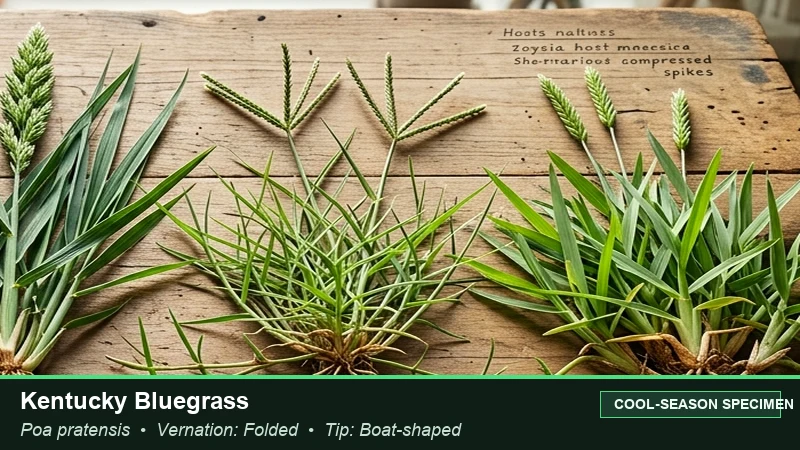
Poa pratensis
The premier cool-season lawn grass in North America, famous for its deep blue-green emerald hue, self-repairing subterranean rhizomes, and classic boat-shaped leaf tips.
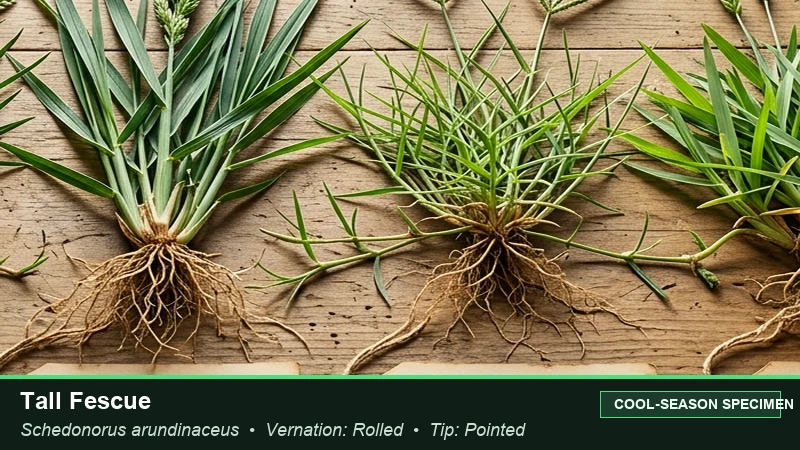
Festuca arundinacea
Deep-rooted, resilient cool-season workhorse featuring prominent dorsal blade ridges, exceptional drought and heat persistence, and superior transition zone adaptability.
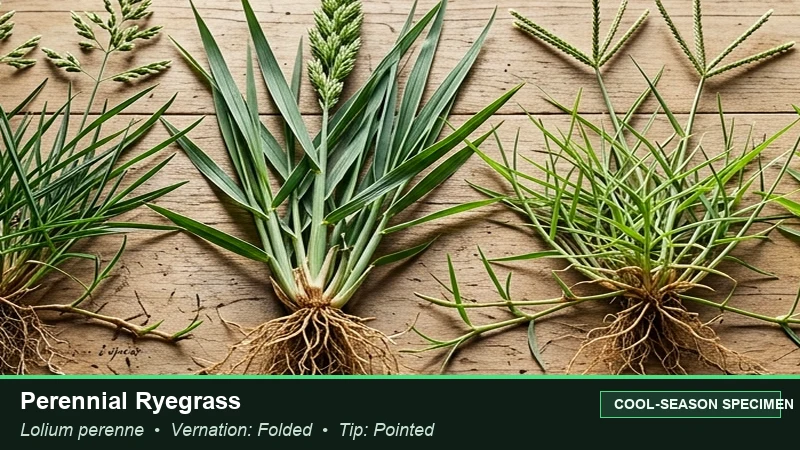
Lolium perenne
Fastest-germinating cool-season turf species with high wear tolerance, brilliant dark green shine on leaf undersides, and distinct claw-like clasping auricles.
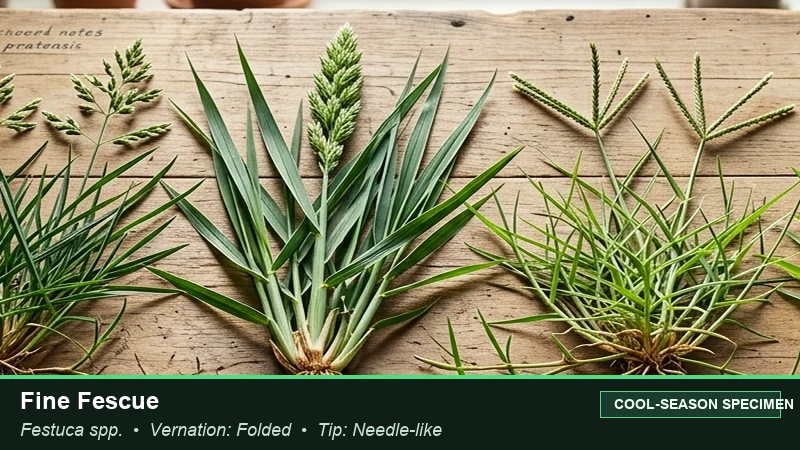
Festuca rubra
Delicate needle-fine turf with industry-leading shade performance under heavy tree canopies. Requires minimal nitrogen fertilization and thrives in acidic soils.
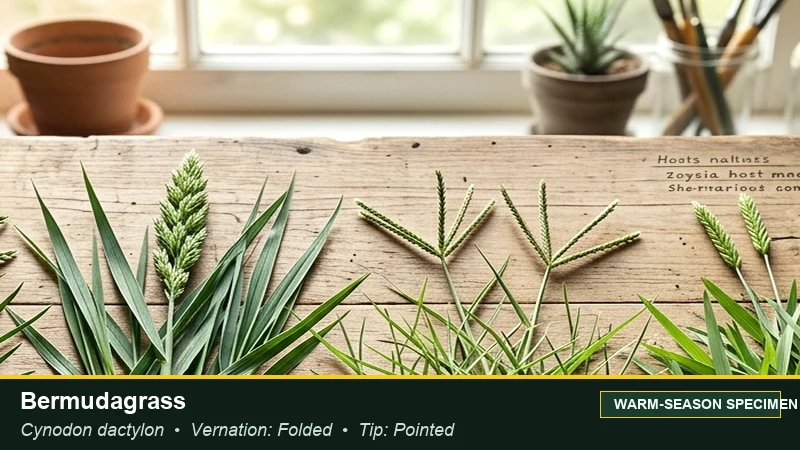
Cynodon dactylon
Aggressive, sun-loving warm-season turf forming dense, traffic-impervious sod via dual rhizome and stolon networks. Rapid recovery and tight mowing tolerance.
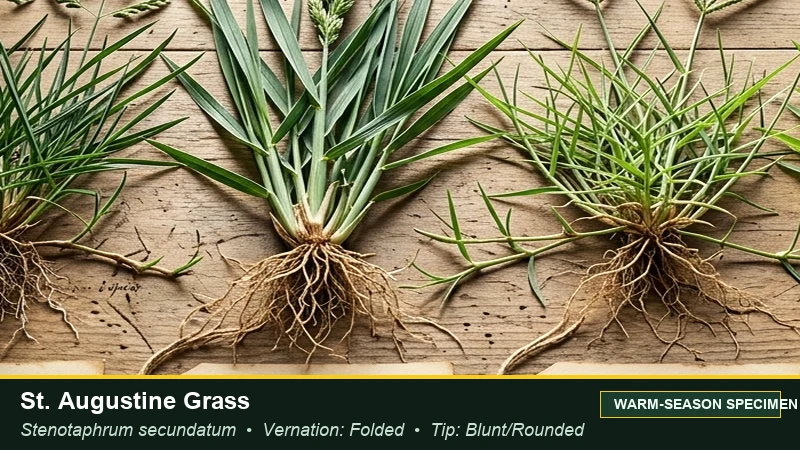
Stenotaphrum secundatum
Broad, flat, blue-green tropical lawn grass spreading exclusively via robust surface stolons. Best shade endurance among warm-season species in humid coastal climates.
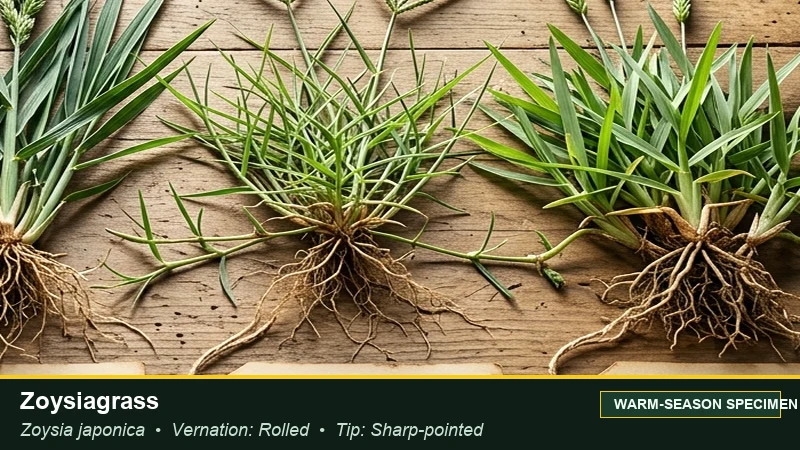
Zoysia japonica / matrella
Luxurious, carpet-dense warm-season grass with stiff upright leaf blades, outstanding cold hardiness into the transition zone, and superior weed resistance.
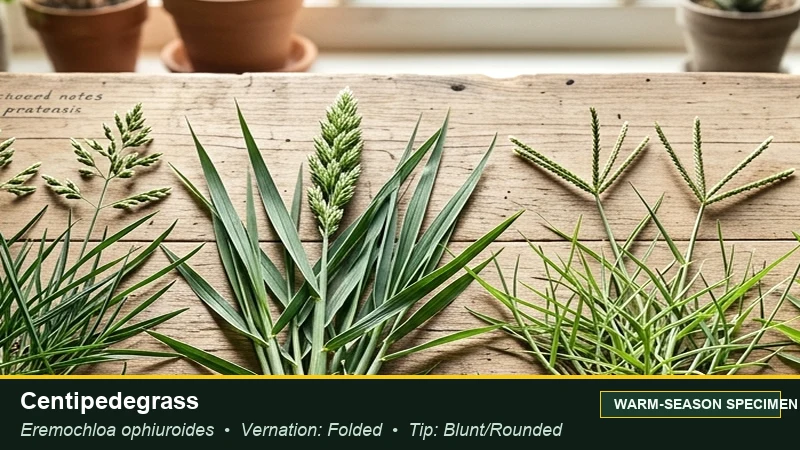
Eremochloa ophiuroides
Light apple-green low-maintenance grass adapted to acidic, nutrient-deficient sandy soils across the southeastern coastal plain. Low nitrogen demand.
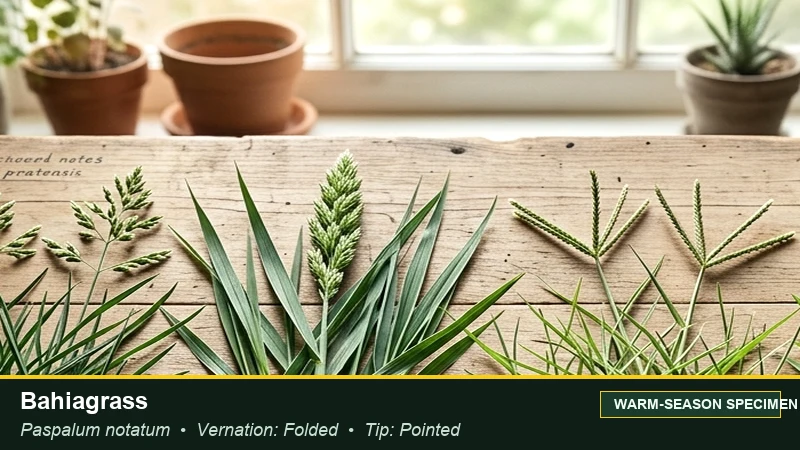
Paspalum notatum
Tough, coarse-textured pasture and utility turfgrass with distinctive Y-shaped seed heads. Survived infertile, sandy, dry soils where other grasses fail.
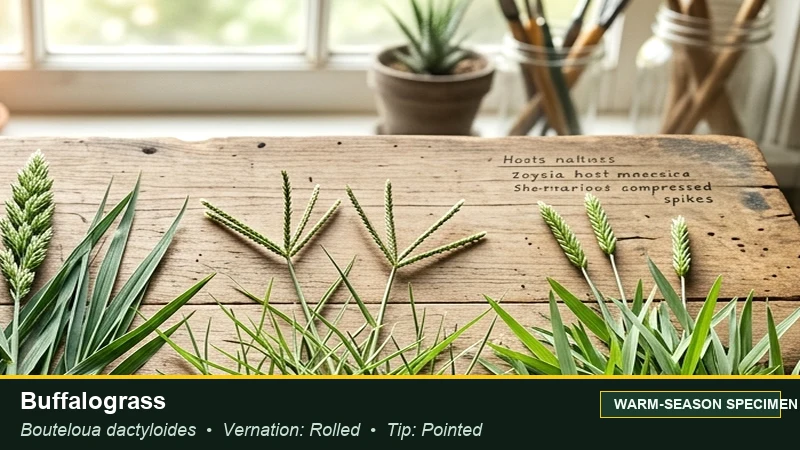
Bouteloua dactyloides
Native North American prairie grass requiring minimal water or mowing. Distinctive blue-green curl with exceptional cold hardiness down to Zone 3.
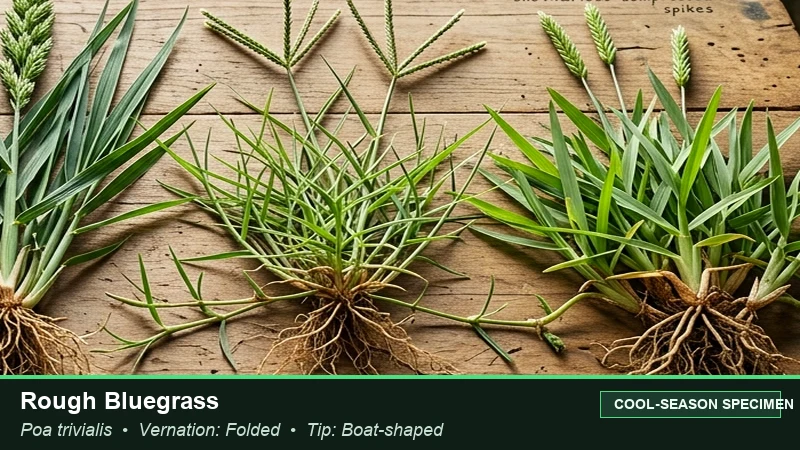
Poa trivialis
Lighter yellow-green cool-season grass with glossy leaf backs and long membranous ligule. Thrives in wet, shaded areas but melts under summer heat.
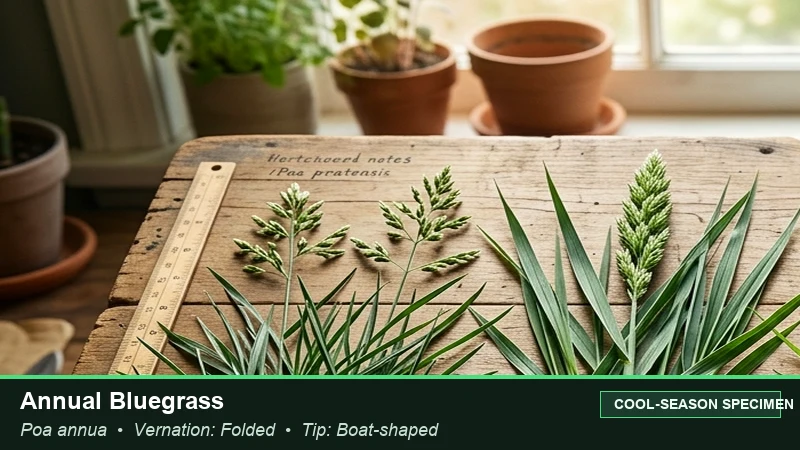
Poa annua
Ubiquitous light-green annual bluegrass producing prolific whitish seed heads even when cut tight. Severe summer wilt risk in high temperatures.
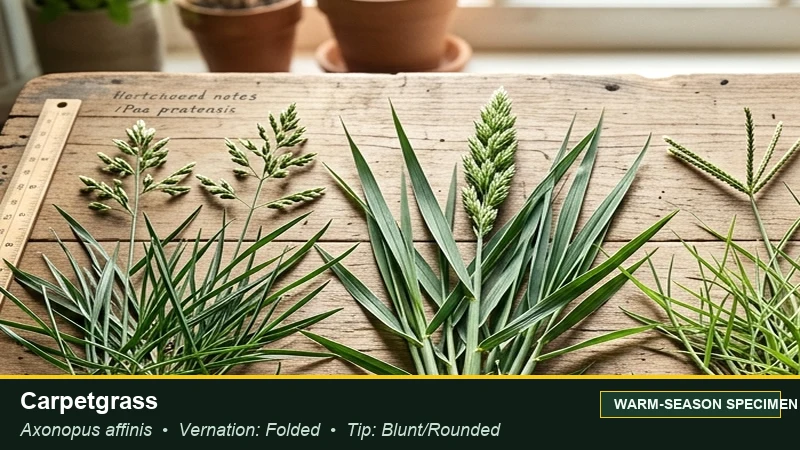
Axonopus affinis
Coarse, flat, creeping warm-season grass thriving in poorly drained, acidic, wet soils of the Gulf Coast. Rapid crab-like seed head generation.
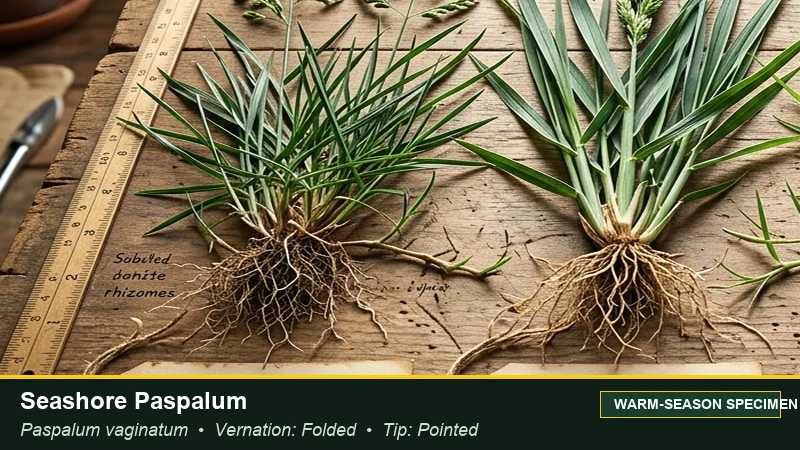
Paspalum vaginatum
Ultra-salt-tolerant coastal warm-season grass irrigable with brackish water or ocean tides. Superb striping capacity and dense striped canopy.
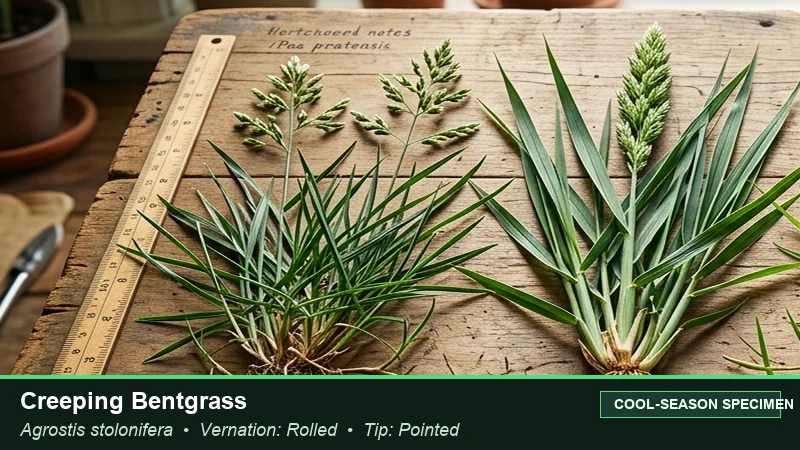
Agrostis stolonifera
The putting green standard. Extremely fine, velvet-like creeping turf requiring specialized reel mowing and intensive disease fungicides.
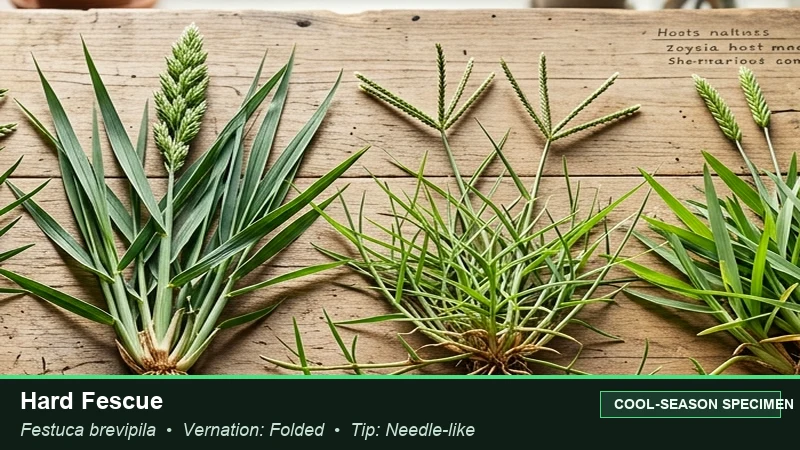
Festuca trachyphylla
Tough, slow-growing fine fescue with blue-green needles. Thrives in low-fertility sites, slopes, and shaded residential lawns requiring low input.
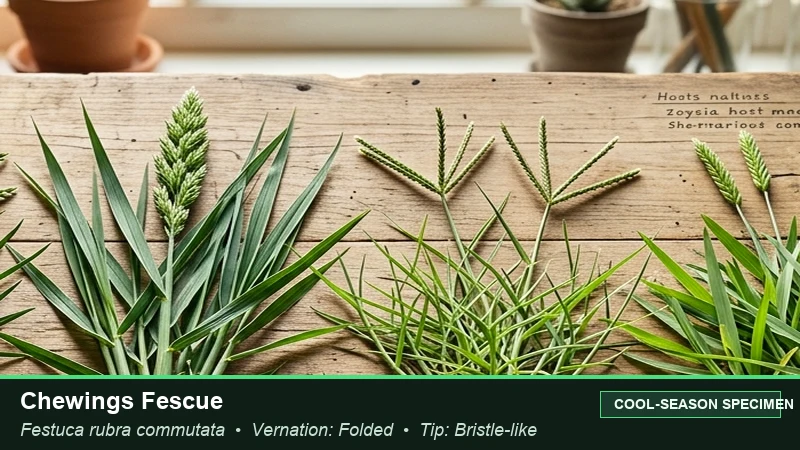
Festuca rubra subsp. commutata
Non-creeping bunch-type fine fescue forming dense, upright, fine-textured sod in shady, sandy loams. Tolerates lower cutting than creeping red fescue.
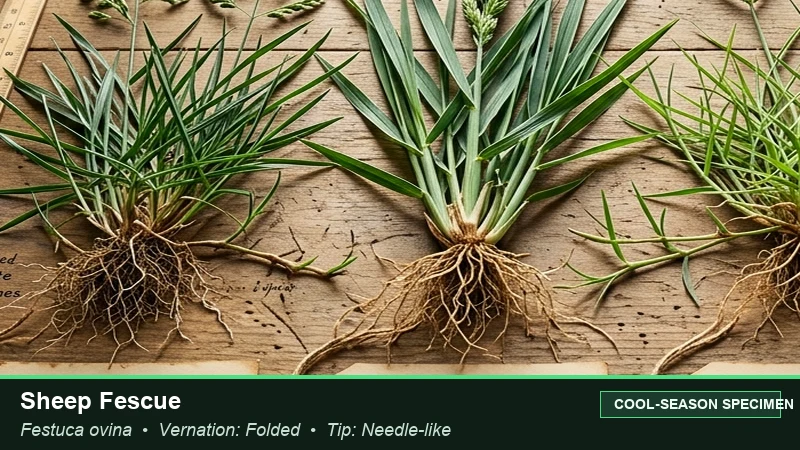
Festuca ovina
Extremely durable, low-input bunch fescue with grayish-blue foliage often utilized for naturalized meadows, erosion control, and un-mowed hillsides.
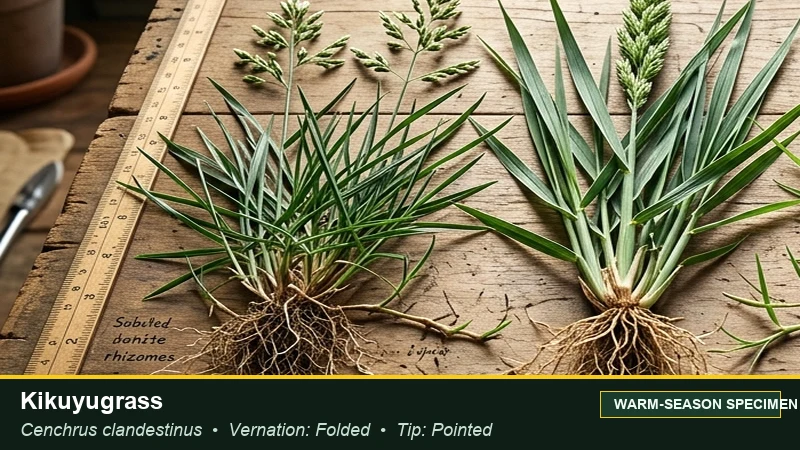
Pennisetum clandestinum
Ultra-aggressive warm-season turfgrass common in coastal California and tropical climates. Forms thick, bouncy thatch with deep subterranean roots.
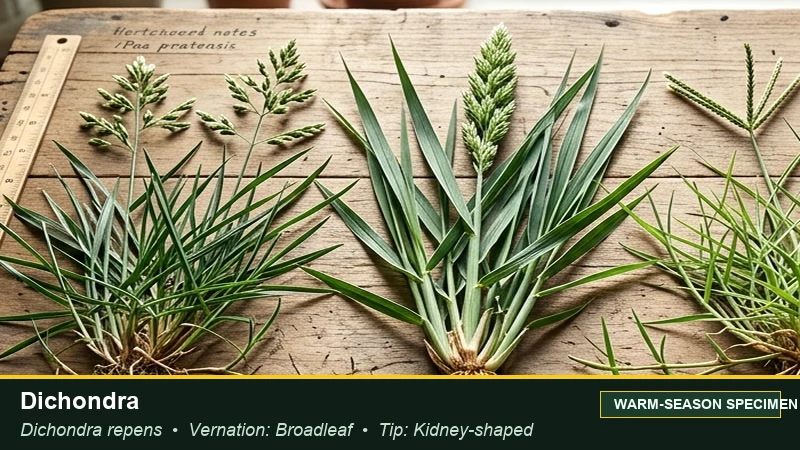
Dichondra micrantha
Broadleaf kidney-shaped groundcover used as a turfgrass alternative in frost-free regions. Produces a lush, bright green carpet without grass blades.
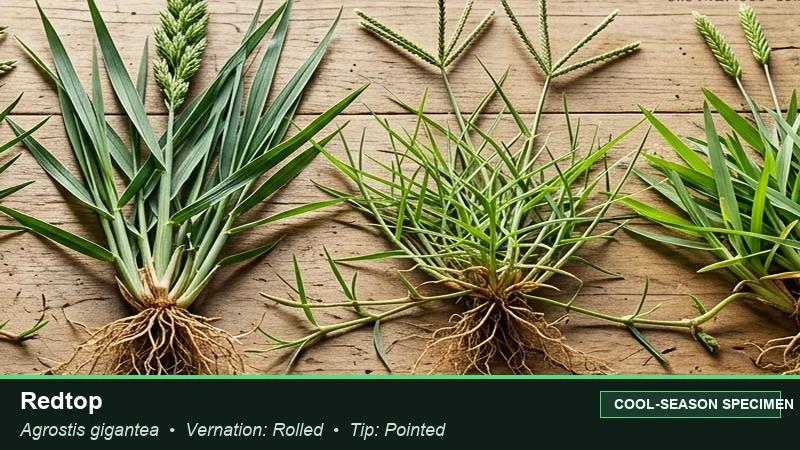
Agrostis gigantea
Vigorous cool-season pasture and stabilizer grass with reddish seed heads and long membranous ligule. Often blended in conservation seed mixes.
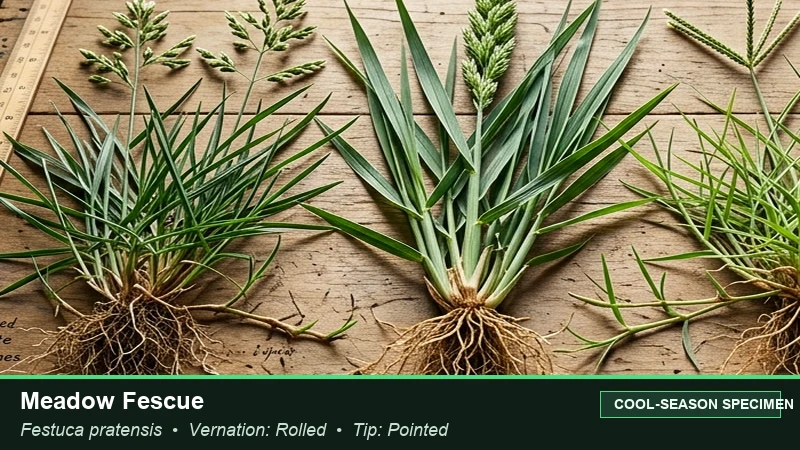
Festuca pratensis
Cool-season perennial grass resembling tall fescue but with softer foliage, absence of rough leaf margins, and superior cold and ice endurance.
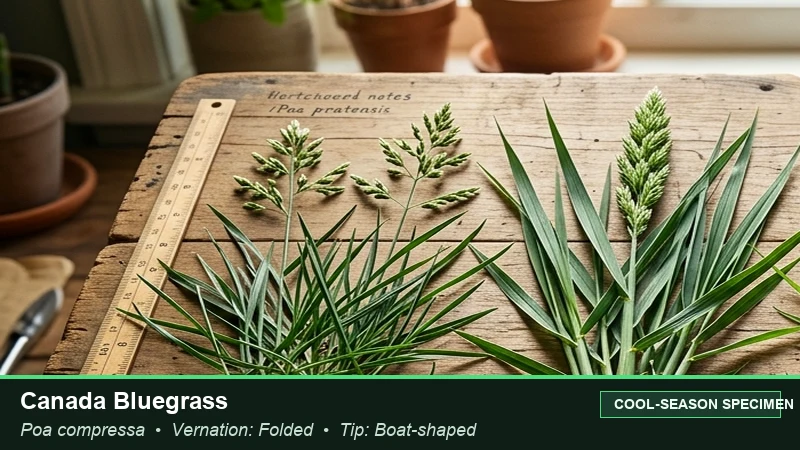
Poa compressa
Blue-green sparse rhizomatous grass with flat compressed stems. Tolerates shallow, dry, acidic gravel soils where Kentucky bluegrass fails.
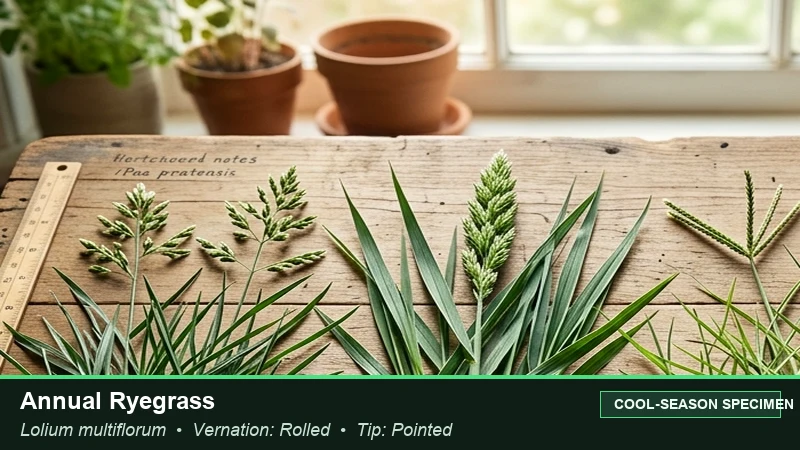
Lolium multiflorum
Rapid temporary nurse crop and winter overseeding species for dormant southern bermudagrass. Dies out naturally in late spring summer heat.
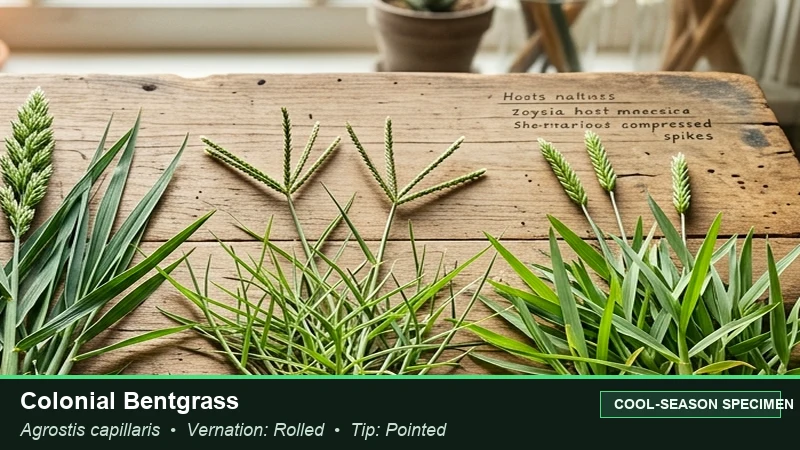
Agrostis capillaris
Denser, more upright bentgrass suited for cool, humid coastal climates (Pacific Northwest, New England). Tolerates low mowing without intense thatch.
Before seeding or overseeding in autumn, calculate your nutrient poundage with our lawn fertilizer nutrient schedules to supply the right ratio of Nitrogen and Phosphorus for rapid root establishment. Furthermore, if you detect invasive weeds encroaching on your turf, verify selective herbicide tolerance by grass species before spraying chemical broadleaf weed killers.
For cool-season climates, Fine Fescue (Creeping Red, Chewings, Hard Fescue) has the highest shade tolerance, needing only 3 to 4 hours of filtered sunlight. For warm-season lawns, St. Augustine Grass (particularly the Palmetto or Seville cultivars) provides the highest shade persistence.
Centipedegrass (mowed at 1.5–2.0 inches) and native Buffalograss (mowed at 2.0–3.5 inches) are slow-growing, low-input turf species requiring mowing only once every 10 to 14 days during peak growing seasons.
Choose Kentucky Bluegrass if you live in USDA Zones 3–6, have full sun, want self-repairing sod from underground rhizomes, and prefer a dense carpet. Choose Tall Fescue if you live in the Transition Zone (Zones 5–8), experience hot dry summers, or have moderate tree canopy shade.
Bermudagrass enters physiological dormancy when soil temperatures drop below 50°F to 55°F. The leaves lose chlorophyll and turn straw-tan to protect the crown and underground rhizomes from freezing damage, greening up naturally when springtime soil warms to 60°F.